
Tomorrow's World Will Be Built on Yesterday's Lessons
As technology and AI continue to advance at an extraordinary pace, George Vaughan reflects on why the future of innovation must remain firmly rooted in human experience.
Technology is moving faster than ever. Artificial intelligence is changing how we work, think, communicate and create, opening opportunities that would have seemed unimaginable just a few years ago. But amid all this progress, there is an important question we should be asking: is it the technology we should be making better or should the focus be on making people's lives better through that technology.
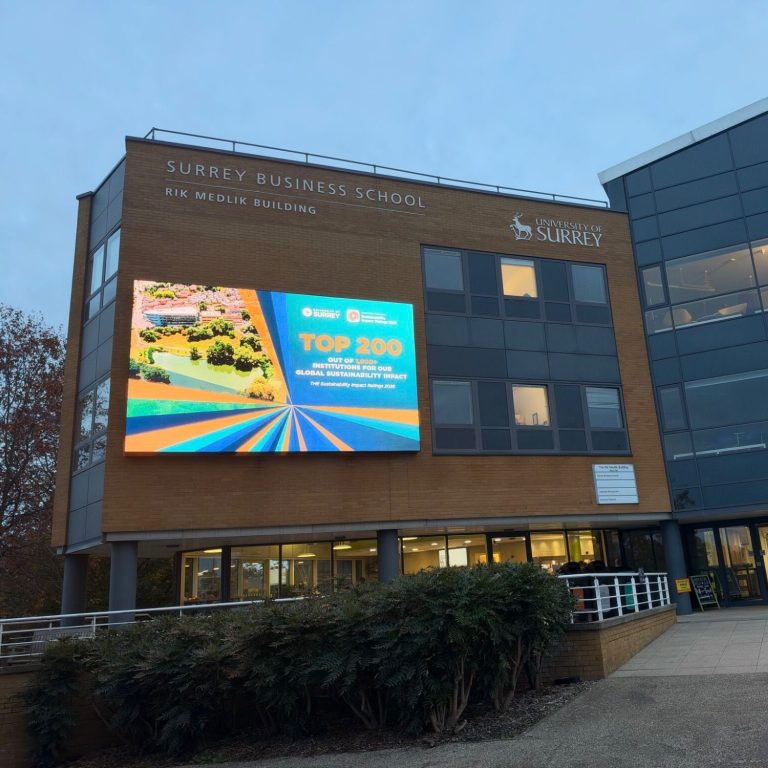
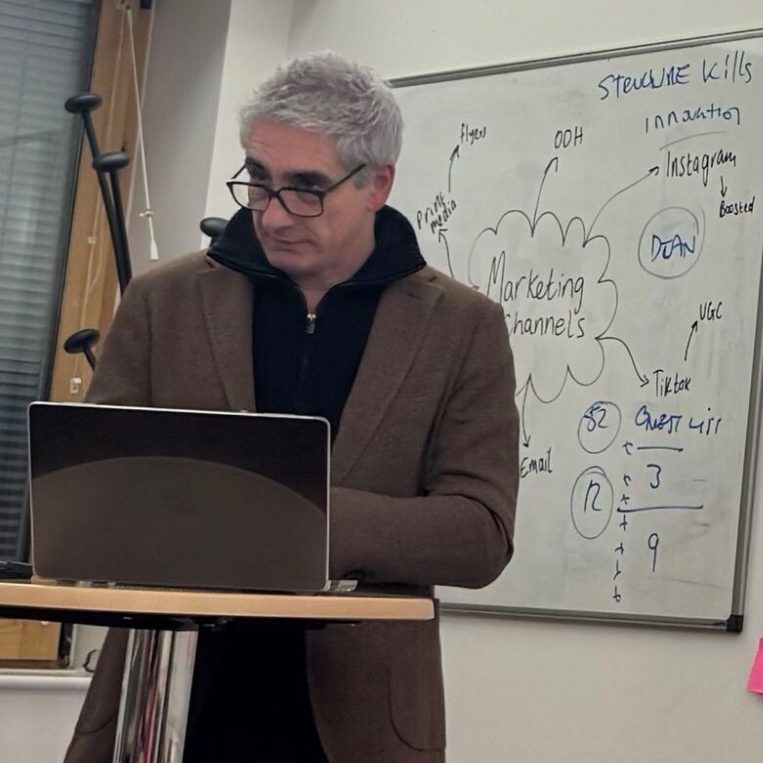
This was one of the themes explored by George R Vaughan during a recent visit to the University of Surrey, where he had the pleasure of speaking with students about innovation, AI and what really creates value in people's lives. The visit also coincided with attendance at the AI for Competitive Advantage business networking event, offering further opportunities to exchange ideas and consider the changing role of technology in business and society.
For George, meaningful innovation doesn't always begin by looking forward. Sometimes, the best place to start is by looking back at the things that have always mattered to us.
Human connection. Experiences. Memories. A sense of belonging.
These are the things that shape our lives, influence our decisions and stay with us long after the technology that may have enabled them has been forgotten. They are also what give meaning to the experiences we create, whether individually, within communities or across generations.
Keeping people at the heart of innovation
As AI becomes increasingly sophisticated, it is easy to become caught up in what technology can achieve. Greater efficiency, faster processes, more accessible information and new ways of working all have enormous potential. But technological advancement alone should never be the measure of success.
Making technology better doesn't necessarily make people's lives better.
The real opportunity lies in understanding people, recognising what matters to them and using technology to create experiences that are genuinely valuable.
Community, creativity, curiosity and our ability to collaborate and solve problems are fundamental to who we are. These human qualities should remain central to how we develop and use technology, rather than becoming casualties of its progress.
AI is undoubtedly a powerful tool, but it should be just that: a tool to improve our lives, support our capabilities and open up new possibilities, rather than dictate how we think, work or interact.
Inventing the path, not following the trail
As AI makes information, knowledge and technical capabilities increasingly accessible, the real differentiator may no longer be simply what we know or how quickly we can access it.
Instead, it will be our ability to interpret that information, understand human needs and turn ideas into something meaningful.
This requires imagination, independent thinking and a willingness to challenge convention. If we allow technology to erode our creativity, curiosity and capacity to find our own solutions, we risk becoming passive participants in a future that we should be actively shaping.
We should be inventing the path, not simply following the trail.
This is particularly relevant when considering the future of experiences across sectors such as hospitality, leisure, retail and venues, where technology can play an important role in connecting people, simplifying interactions and creating more engaging environments.
The most successful solutions are not necessarily those with the most visible technology or the most impressive technical specifications. They are the ones that understand the people using them and make their experiences better.
The best technology should be the kind you never see
Perhaps this is the ultimate measure of successful innovation: technology that works so seamlessly that it becomes almost invisible, allowing the human experience to take centre stage.
Whether it is making a journey easier, creating a more personal experience, improving accessibility or helping people feel more connected, technology should enable rather than overwhelm.
The future will undoubtedly bring further advances in AI and digital capability. But as we look ahead, we should also remember the lessons of yesterday and the things that have always given our lives meaning.
Ultimately, progress should not just be measured by what technology can do. It should be measured by the difference it makes.
George would like to thank Ekaterina Murzacheva, PhD, and the team at Surrey Business School, University of Surrey, for the invitation, as well as the students and faculty for their engagement and thoughtful questions.
It was also an opportunity to catch up with Iis Tussyadiah and meet new colleagues, including Athina Ioannou and Thomas Fackler, to discuss how a human-centred approach to innovation continues to be relevant across projects and developments, including Aviva Arena and Brabazon.
At The Digital Line, we believe the most valuable technology is not simply about what is possible, but about what is meaningful.