Building Tomorrow: Inside Dubai’s Living Lab for Future Cities
An interview with Andrew Cockburn
By 2050, nearly 70% of the world’s population will live in cities. Yet while urban populations surge, the way cities are designed, governed and financed has often struggled to keep pace. Around the world, policymakers and planners are grappling with a defining question: how do we build cities that are not just smarter, but more liveable, sustainable and human?
In Dubai, one answer is beginning to take shape.
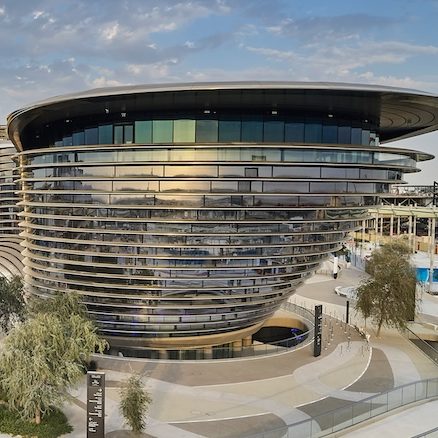
At Expo City Dubai, an ambitious experiment is underway. Urban planners, technologists, and policymakers are working together to transform an entire district into what they describe as a “living laboratory” - a place where new ideas are tested not in theory, but at real city scale.
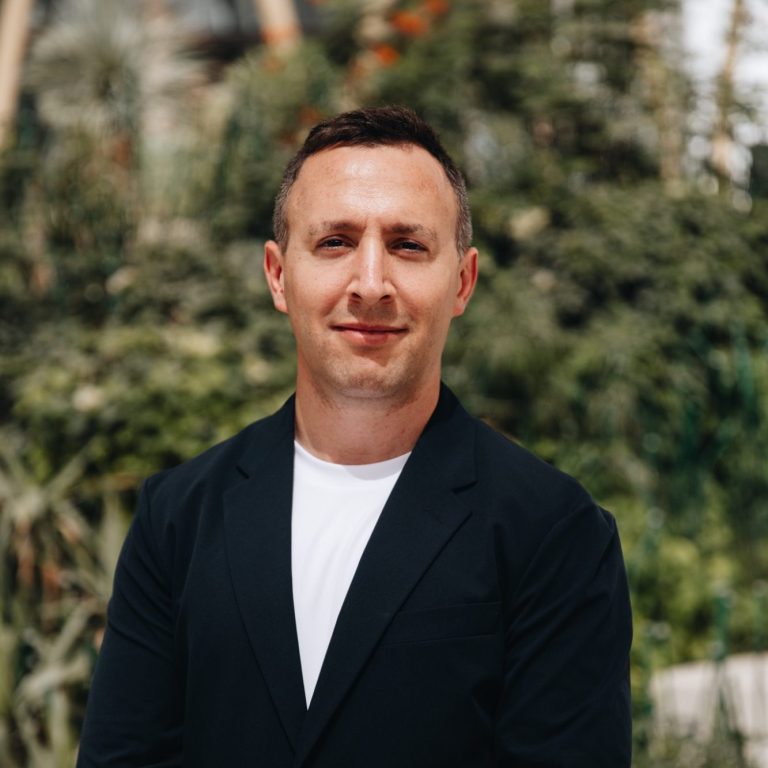
At the centre of this effort is Andrew Cockburn, Director within the Urban Lab at Expo City Dubai. His career spans UK government policy, global smart-city programmes, and private-sector technology ventures, giving him a rare vantage point on what it really takes for cities to move beyond talking about innovation - and start delivering it.
“Cities Don’t Innovate - They Procure”
Cockburn doesn’t hesitate when asked what’s broken in how cities approach innovation today.
“The hard truth,” he says, “is that most cities don’t actually innovate; they procure.”
In his view, there’s a structural gap between buying technology and genuinely transforming how a city functions. Too often, cities adopt a reactive model: a company arrives with a polished product, and the city purchases it without fully understanding how - or whether - it solves a real problem.
The result is what he calls “digital wallpaper”: isolated solutions like smart parking apps or standalone sensors that fail to change the underlying system.
“Real innovation isn’t about buying gadgets,” he explains. “It’s about institutional courage - defining problems first, experimenting in public and accepting risk.”
Until cities shift from risk avoidance to risk management, he argues, they will remain consumers of technology rather than architects of transformation.
Learning from Global Leaders
Despite these challenges, some cities are getting it right.
Singapore stands out as the gold standard, having aligned policy, infrastructure, and experimentation over decades. Helsinki has taken a different approach, treating openness - data sharing and public participation - as core infrastructure. Barcelona has pushed back against big-tech dominance, reclaiming the “digital city” for its citizens.
Dubai, however, offers something unique: speed.
“In most cities, you can spend three years debating whether a project should happen,” Cockburn says. “In Dubai, the conversation is almost immediately about how to make it happen responsibly.”
That velocity, he argues, is more than a cultural quirk - it’s a competitive advantage in a world where urban challenges are evolving faster than bureaucracies can traditionally respond.
A Living Laboratory Meets Reality
Expo City’s Urban Lab exists to test ideas under real-world conditions - and that reality is often messy.
“The most surprising insight,” Cockburn admits, “is how quickly elegant ideas fall apart when they hit the pavement.”
Cities, he emphasises, are not engineering systems. They are social systems. Even the most technically sound solution must contend with human behaviour, legacy infrastructure and institutional inertia.
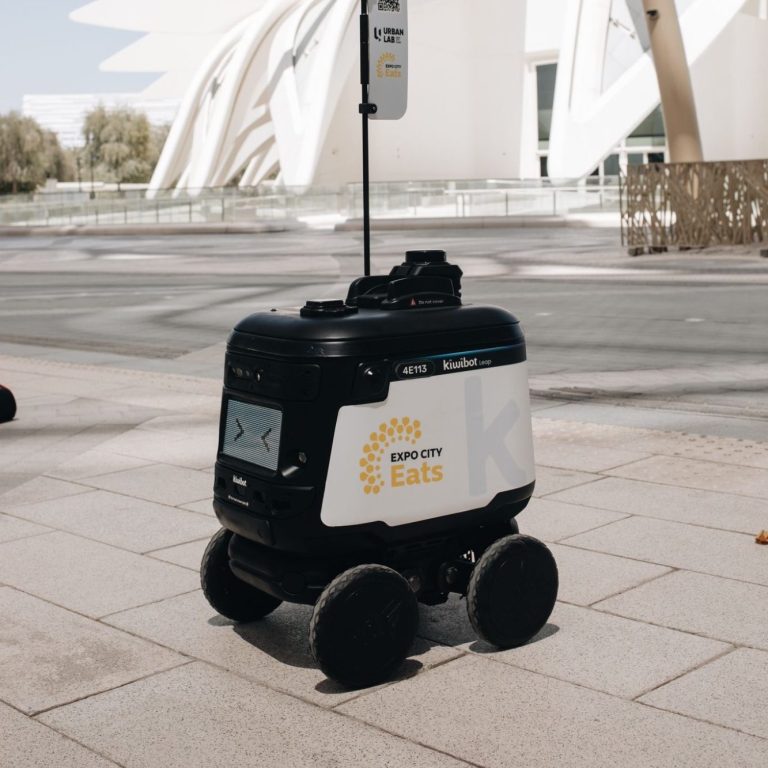
Autonomous systems are a prime example. While they may function perfectly in controlled environments, real-world conditions introduce unpredictability, from pedestrians to outdated workflows.
This is precisely why a living lab matters. It allows cities to fail early, iterate quickly and avoid costly large-scale mistakes.
“It’s better to test and adapt in a controlled district,” he says, “than to roll something out city-wide that simply doesn’t work.”
Rethinking Innovation: From Supply to Demand
A key innovation at Expo City is its approach to what Cockburn calls “Return on Innovation” (ROI).
Rather than adopting technology because it exists, the Urban Lab identifies specific problems across city services, then actively shapes the market to deliver solutions.
“We’re demand-driven, not supply-led,” he explains. “We define the need, baseline the opportunity and then go to the market.”
This approach flips the traditional procurement model. Cities stop buying what they’re told they need and instead become active participants in shaping innovation.
Crucially, the team is technology-agnostic.
“If something from the 1990s delivers the same outcome at a lower cost than the latest AI solution,” Cockburn says, “why spend more?”
It’s a pragmatic philosophy and one that prioritises outcomes over hype.
Putting People at the Centre
For Cockburn, the defining principle of any future city is simple: it must be built around people.
“Too many projects start with: ‘What can this technology do?’” he says. “We should be asking: ‘What’s making people’s lives difficult?’”
At Expo City, this translates into bringing operational teams - those who actually run the city - into the innovation process from day one. By involving planners, engineers, and service providers alongside technologists, the focus shifts from novelty to utility.
If a solution doesn’t make daily life tangibly better - shorter commutes, cleaner air, more intuitive services - it simply doesn’t matter.
Trust, Transparency, and Data
As cities deploy sensors, AI, and data-driven services, public trust becomes critical.
“Trust is a currency,” Cockburn says. “And it’s earned through transparency and outcomes.”
Citizens need clear answers: What is this technology? Why is it here? What happens to the data?
But communication alone isn’t enough. Trust ultimately depends on visible benefits. If residents see safer streets or improved services, acceptance follows. If technology feels intrusive or abstract, resistance grows.
“Public trust is finite,” he warns. “If you lose it, innovation becomes politically impossible.”
AI: Hype vs Reality
On artificial intelligence, Cockburn is strikingly blunt.
“To be honest, no, it’s not living up to the hype,” he says.
He views much of the current AI boom as driven more by market dynamics than meaningful urban impact. Despite vast investment, truly transformative applications in city environments remain limited.
That’s not to say AI has no role - it does. But its value lies in targeted, practical use cases rather than sweeping promises of systemic transformation.
The Quiet Power of Sustainable Innovation
When it comes to sustainability, Cockburn believes the most impactful innovations are often the least glamorous.
Low-carbon construction materials, for example, are advancing rapidly and they matter enormously given the built environment’s contribution to global emissions.
Urban cooling is another critical frontier. As temperatures rise, cities are rethinking materials, vegetation and design to reshape microclimates at street level.
Perhaps most importantly, buildings are evolving from passive energy consumers into active participants in integrated energy systems.
“The real shift,” he says, “is that sustainability is no longer an add-on but a core design requirement.”
Startups vs Big Tech
Innovation ecosystems, Cockburn argues, depend on balance.
Large technology firms provide scale and infrastructure, making them the “plumbing” of modern cities. Startups, however, bring something equally essential: the willingness to challenge assumptions.
“Startups are the irritants,” he says. “They force the system to evolve.”
The most successful cities are those that create environments where startups, corporates and the public sector collaborate, rather than compete, in shaping solutions.
The City of 2035
Looking ahead, Cockburn believes the defining characteristic of successful cities will not be technological sophistication, but adaptability.
“We’re entering an era of extreme uncertainty,” he says, citing climate change, demographic shifts, and rapid technological disruption.
The cities that thrive won’t be those that predict the future perfectly, but those that build the capacity to respond as conditions change.
“Resilience isn’t just about infrastructure,” he adds. “It’s about governance that can move as fast as the challenges it faces.”
What’s Overhyped - and What’s Not
In Cockburn’s view, the most overhyped ideas are those promising full automation.
“The idea that a city can run autonomously without human judgment, I just don’t believe it,” he says.
Cities are complex, human systems with low tolerance for failure. While automation has a role, it will never replace human oversight.
By contrast, the most underestimated innovation is institutional change: how cities organise themselves, procure solutions, and partner with industry.
“It doesn’t make headlines,” he admits. “But it’s what determines whether innovation actually scales.”
A Future That Feels Effortless
If Expo City Dubai succeeds in its mission, Cockburn believes residents won’t talk about innovation at all.
“The best technology is invisible,” he says. “It’s just the way things work.”
Instead, people will notice something simpler: it’s easier to move around, the air feels cleaner, buildings feel healthier, and services are seamless.
“They won’t describe it as a ‘smart city,’” he adds. “They’ll just say it’s a great place to live.”
And perhaps that’s the ultimate goal, Not to build cities that feel futuristic, but cities that quietly, consistently work better for the people who call them home.
George R Vaughan